


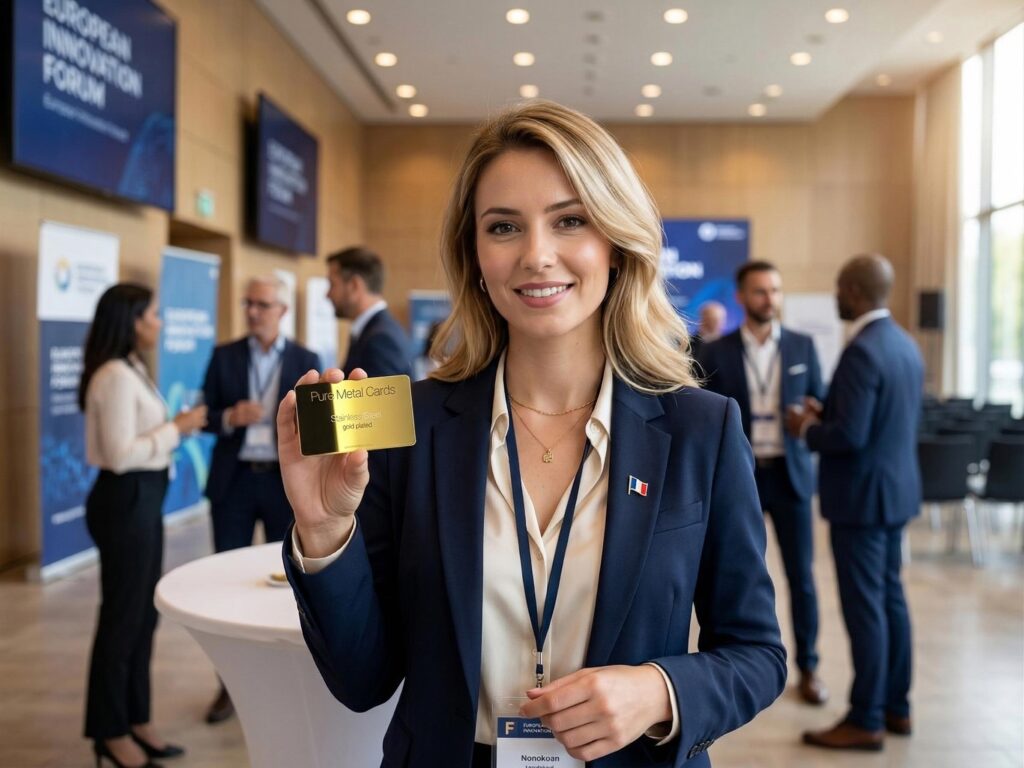
You hand over your card. The room is loud, hands are shaking, introductions are flying. Thirty seconds later, your new contact slides your card into their jacket pocket — and you watch a dozen paper cards from other people get stacked, folded, and eventually forgotten at the bottom of a conference bag.
That moment — the pause, the look, the “Wait, is this metal?” — is worth more than most executives realize. And it’s entirely measurable.
Metal business cards are increasingly standard among C-suite professionals, investors, and senior sales leaders. But they’re still dismissed by some as a luxury vanity item rather than a strategic investment. This article dismantles that assumption with data, psychology, and straightforward math — and shows exactly how a single metal business card can generate a return that justifies its cost many times over.
First Impressions Are a Business Asset — and They’re Quantifiable
Research in consumer psychology consistently shows that tactile experiences influence judgment. When someone holds an object that is heavier, smoother, and more substantial than expected, they unconsciously attribute those qualities — weight, solidity, permanence — to the person who gave it to them.
For executives operating in high-stakes environments, this is not a trivial advantage. A metal business card communicates competence and attention to detail before you’ve said a word after the handover. In industries where trust is the currency — financial services, consulting, luxury real estate, executive recruitment — that signal can be the difference between a follow-up call and a forgotten name.
Studies on business card retention show that premium cards are kept significantly longer than standard paper alternatives. One survey of business professionals found that distinctive cards — those with unusual materials, finishes, or formats — are retained by recipients at roughly three times the rate of standard paper cards. If your card stays in someone’s wallet for six months instead of being recycled after a week, the ROI of that single card begins to compound.
The Cost-Per-Opportunity Math That Changes the Conversation
Let’s run the numbers. A premium metal business card from Pure Metal Cards costs in the range of $3–$5 per card depending on customization. A single deal, new hire, or closed client relationship at most business levels is worth orders of magnitude more. The question is never whether a $3 card is expensive. The question is: what is one well-placed introduction worth to your business?
Consider this scenario: You attend a private equity summit. You meet 20 qualified prospects. You hand out 20 metal cards. Fourteen people remember your name the next day because your card is still on their desk — not discarded. Five book a follow-up call. Two become clients. Your card order cost $600 for 200 metal cards. Your two new clients are worth $40,000 in combined annual revenue.
That’s a 6,500% return on the card investment at that event alone. Even if only one contact converts, the math holds.

Durability Means Cost-Per-Use Drops with Every Interaction
Paper business cards are a disposable product. They bend, stain, fade, and often require reprinting after design updates or role changes. The true cost of a paper card is not the $0.10 unit price — it’s the cumulative expense of reorders, reprints, and the soft cost of handing out a scuffed card to an important contact.
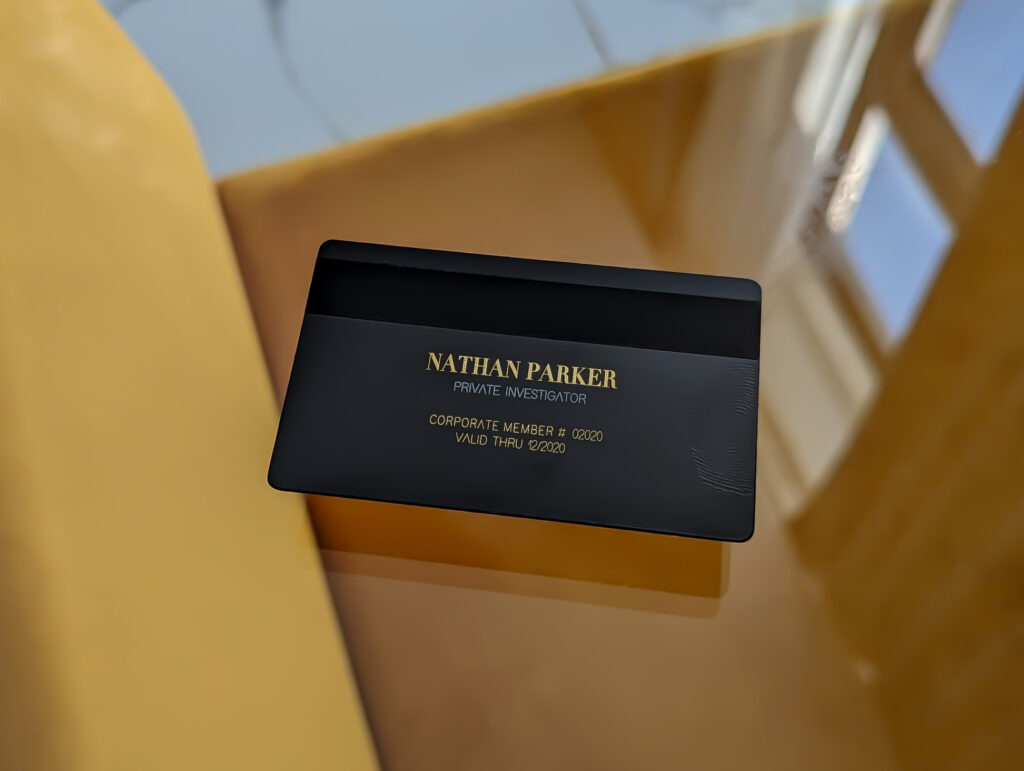
A stainless steel or titanium metal card, by contrast, has an effective lifespan measured in years. The card you hand to a prospect in March is structurally identical to the one you give a client in December. At scale, the cost-per-use of a metal card — calculated across its full lifespan — routinely undercuts that of premium paper cards.
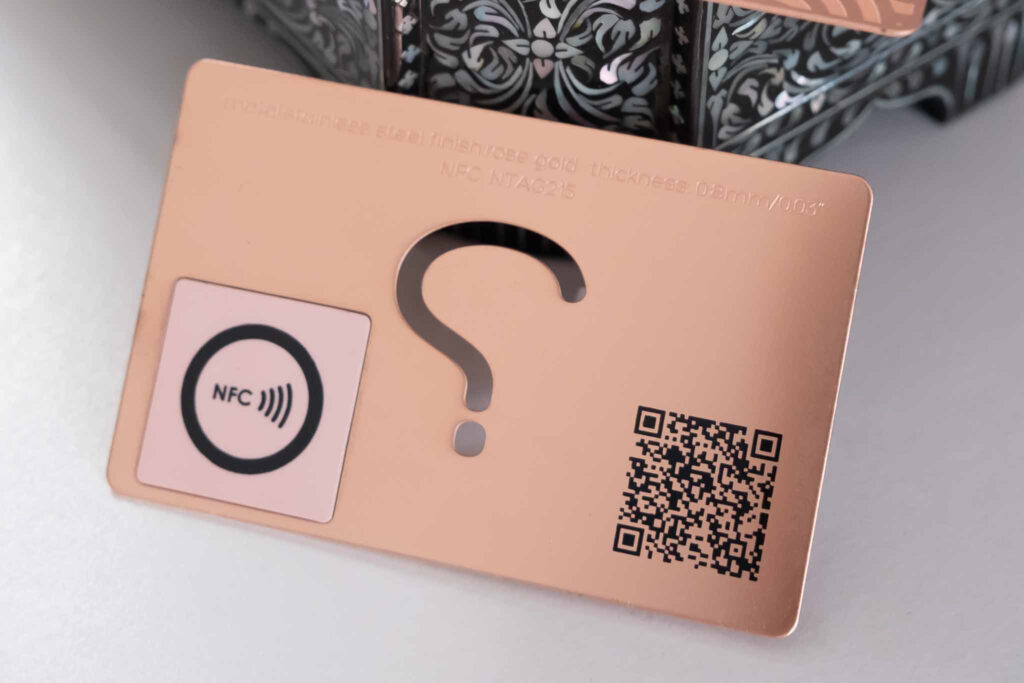
NFC metal cards add another dimension: your digital content is updatable without replacing the physical card. Change roles, launch a new website, or redirect to a seasonal campaign page — the card in your prospect’s wallet continues to deliver current information.
The Conversation Starter Effect: Earned Media at Zero Cost
One ROI driver that rarely appears in spreadsheets is the conversation starter effect. Metal business cards routinely prompt recipients to show the card to colleagues, share it on social media, and reference it in conversation. This organic word-of-mouth exposure is earned media — it comes at no additional cost once the card exists.
LinkedIn posts featuring distinctive metal cards from brands like Pure Metal Cards regularly generate thousands of impressions. When a recipient photographs your card and posts it, you’ve just earned organic brand exposure to their entire professional network — all from an object that cost less than a coffee.
NFC Metal Cards: When Your Business Card Becomes a Trackable Asset
The introduction of NFC-enabled metal business cards has transformed what was once a passive networking tool into an active, data-driven asset. An NFC chip embedded in a metal card allows recipients to tap their smartphone and be instantly directed to your LinkedIn profile, portfolio, calendar link, or custom landing page. No typing. No friction. No lost contact details.
More importantly for ROI measurement: NFC cards are trackable. Every tap generates analytics data — when the card was used, how many times, which links were clicked, and from which locations. For the first time, professionals can quantify the downstream impact of their networking efforts with the same rigor they’d apply to a digital marketing campaign.
Sales leaders integrating NFC metal cards with CRM platforms such as Salesforce or HubSpot can automatically log new contacts from card taps, assign follow-up tasks, and track conversion rates from first meeting to closed deal. This closes the attribution loop that has historically made networking ROI difficult to prove to CFOs and budget holders.

How to Maximize Your Metal Business Card ROI: A Practical Checklist
To ensure your investment performs at its highest potential:
- Choose a design that reflects your brand with precision — minimalist luxury outperforms busy design in high-value networking environments.
- Opt for NFC integration if you have an active digital presence or want trackable networking data.
- Connect your NFC card to a CRM landing page, not just a LinkedIn profile, to capture leads directly.
- Carry cards consistently — the ROI of a card sitting in your desk drawer is exactly zero.
- Follow up within 24 hours of any event where you distribute cards — the card creates the opening; the follow-up closes it.
- Track your card analytics monthly and correlate tap activity with pipeline entries to demonstrate ROI to stakeholders.
Hidden ROI Factors You Might Overlook
Beyond direct sales, metal business cards deliver hidden ROI in several ways:
- Brand Positioning: They reinforce your image as a premium provider, aligning with luxury branding strategies.
- Social Media Buzz: Recipients often share photos of unique cards online, giving you free exposure.
- Longevity: Unlike paper cards, metal cards don’t degrade. They remain in circulation for years, continuing to generate leads.
- Exclusivity: By handing out fewer but higher-quality cards, you create scarcity, which increases perceived value.
The Bottom Line: One Card, Infinite Possibilities
A metal business card is not an expense. It’s a micro-investment in every relationship you haven’t yet formed. In an era where digital noise is deafening and attention is the scarcest professional resource, the physical, tactile impact of a precision-engineered metal card cuts through in a way no email, LinkedIn connection request, or digital exchange can replicate.
When you calculate the metal business card ROI not on unit cost but on relationship value, the math becomes undeniable. One event. One card. One conversation that turns into a client. That’s not a luxury — that’s leverage.
The hidden ROI of metal business cards lies in their ability to transform a single interaction into a profitable relationship. At just one event, one card can pay for itself—and potentially generate returns that ripple across your business for years.
In a world where impressions matter, investing in luxury metal business cards is not just about style—it’s about strategy. They are more than contact details; they are conversion tools, brand statements, and ROI machines.
Ready to turn your networking investment into measurable results? Explore Pure Metal Cards’ executive collection at puremetalcards.com.